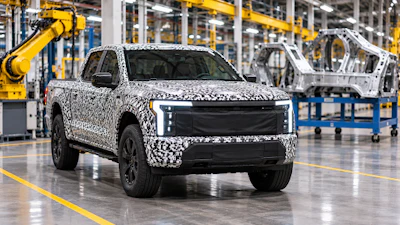

Ford has begun pre-production of its Fathom electric pickup at its Louisville Assembly Plant in Kentucky, with deliveries expected in late 2027. The vehicle features an innovative assembly tree manufacturing process and uses large structural castings to replace 146 individual components, reducing production complexity and costs.
- Ford has completed approximately 90 percent of validation testing for the Fathom electric pickup ahead of full production in late 2027.
- The new manufacturing approach uses an assembly tree method, assembling the vehicle's front, center, and rear sections separately before bringing them together.
- Two large structural castings replace 146 individual components, significantly reducing parts and assembly operations required.
- Ford has invested more than US$2 billion in Louisville manufacturing operations to support the Fathom vehicle program.
- Collision repair facilities must prepare for new repair procedures, as large structural castings may change damage assessment and replacement requirements compared to traditional vehicles.
Ford's next electric pickup is already rolling off the production line, even though customers won't be getting their hands on one until late 2027.
The automaker has confirmed that its first Fathom electric pickups have been built at its Louisville Assembly Plant in Kentucky, marking a major step in the development of its new Universal Electric Vehicle platform.
During a recent earnings call, Ford chief operating officer Kumar Galhotra said approximately 90 per cent of validation testing had been completed. The vehicles currently being assembled are intended to test manufacturing processes and vehicle performance ahead of full production.
What's particularly interesting is how Ford plans to build them.
Rather than using a conventional assembly line, Ford is introducing what it calls an "assembly tree." The vehicle's front, centre and rear sections are assembled separately before being brought together.
The company is also making extensive use of large structural castings. According to Ford, 146 individual components have been replaced by just two large castings, reducing the number of parts and assembly operations required.
Ford says it has already produced approximately 5,000 of these castings as it prepares for higher production volumes.
The company has invested more than US$2 billion in its Louisville manufacturing operations to support the new vehicle program.
The next challenge is ensuring suppliers can deliver components at the volumes and quality levels required for full-scale production.
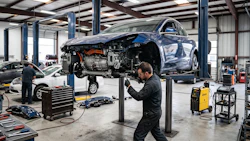
For Canadian collision repair facilities, Ford's new manufacturing approach raises some important questions.
Large structural castings can reduce manufacturing costs, but they may also change repair options following a collision. Damage that might previously have involved replacing or repairing several smaller components could involve a much larger structural assembly.
Repairers will need to pay close attention to Ford's approved repair procedures, structural replacement requirements and restrictions on sectioning or straightening.
The Fathom offers another indication that vehicle manufacturers are rethinking traditional construction methods as they work to bring down EV costs.