Canada’s EV fleet is getting older, putting battery condition and pre-collision health into a much more complicated repair equation.
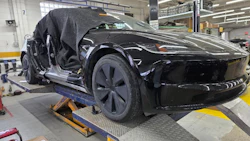
A five-year-old EV with 150,000 kilometres rolls into a collision repair facility.
Its battery wasn’t new before the crash.
That simple fact could become increasingly important as Canada’s electric vehicle fleet ages and more EVs move to their second and third owners.
Collision repairers are accustomed to separating collision damage from wear and tear. A worn tire wasn’t caused by the crash. Neither was an old scratch on the quarter panel or a suspension component already nearing the end of its life.
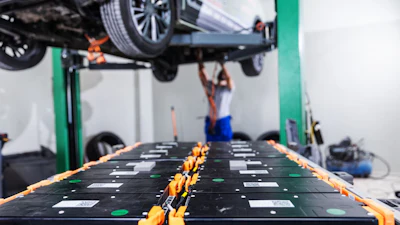
A traction battery introduces a considerably more expensive version of the same question.
Battery state of health naturally changes with time, kilometres, charging patterns, temperature and use. Two apparently identical EVs with similar odometer readings can arrive at very different points in their battery lives.
Recent real-world data from Austrian battery diagnostics company Aviloo illustrates just how large those differences can be. Aviloo has now accumulated data from more than 500,000 independent battery tests and says mileage alone provides an incomplete picture of battery condition. Its testing also looks at battery management systems, sensors and parameters at the pack and individual cell level.
That has obvious implications for the used-vehicle business, where battery health can affect range, value and a buyer’s confidence.
Collision repair adds another wrinkle.
When a damaged EV enters a repair facility, technicians are trying to determine what the collision did to the vehicle. As the fleet ages, the condition of the battery before impact becomes part of the background against which that assessment is made.
That distinction could become increasingly important. A battery with reduced capacity isn’t necessarily a damaged battery. Likewise, a battery that continues to propel the vehicle after a collision isn’t necessarily unaffected by the impact.
Experienced EV repairers already know the answer can’t come from a glance at the dashboard. What changes with an ageing fleet is the baseline.
Early EV collision repairs often involved relatively young vehicles. As those vehicles accumulate kilometres, repairers will increasingly encounter batteries that have lived very different lives before the accident.
One may have spent years charging primarily at home. Another may have relied heavily on DC fast charging. One may have spent its winters outside in Quebec. Another may have lived in a heated garage. Driving patterns, charging habits and battery thermal management can all influence what arrives at the repair facility.
Odometer readings alone won’t tell the whole story.
That creates an interesting question for the collision industry: how much battery information should form part of documenting the vehicle before and after a repair?
Collision repair has steadily moved toward more documentation. Pre-scans, post-scans, measurements, OEM procedures and calibration records help demonstrate what condition a vehicle was in, what work was required and whether the repair process restored the affected systems properly.
Battery health could become another piece of that record.
Not because collision repairers should be responsible for reversing years of battery degradation. Quite the opposite. Better information may help distinguish what existed before the collision from what resulted from it.
That distinction has financial implications.
Imagine two otherwise similar five-year-old EVs involved in comparable collisions. One enters the facility with a healthy, well-balanced battery. Another arrives with substantially lower state of health or an existing cell imbalance.
Should those vehicles produce identical repair decisions? Maybe not.
Vehicle value adds even more pressure. Mitchell reported that Canadian BEV total loss market values declined 13 percent in 2025, driven by factors including depreciation, more lower-cost EVs entering the market and changing consumer sentiment.
At the same time, battery condition can represent a meaningful portion of the value of a used EV. That means the industry is heading toward a situation where the condition of one expensive component can influence both sides of the repair equation.
What was the vehicle worth before the collision, and what will it take to restore it?
Those questions have always driven collision repair. Battery health simply adds another variable.
There is also a customer side to the equation.
A second or third owner may know very little about the battery’s history. They may know the displayed range and what the vehicle typically delivers on their commute, but not necessarily its measured state of health before the collision.
After a significant repair, that same owner may understandably pay much closer attention to range or charging behaviour.
Good documentation protects everyone.
If a battery assessment establishes its condition before repair work proceeds, the repairer has a clearer baseline. If testing after the repair shows comparable performance and no collision-related faults, there is a much stronger record of what happened and what didn’t.
None of this means every EV collision should trigger a full independent battery health analysis. OEM procedures, damage location and the circumstances of the collision still determine what is required.
It does suggest the industry should start thinking beyond a simple pass-or-fail view of the battery.
Canada’s earliest mass-market EVs are no longer new cars. Nissan LEAFs, Tesla Model S sedans, BMW i3s and other early models have been on the road for years. Many have changed hands. Newer high-volume models are following them into the used market.
That progression will change the mix of vehicles arriving at collision repair facilities.
For repairers who already understand high-voltage safety, the next challenge may be less about learning how to work around the battery and more about understanding the story the battery is telling.
Was it healthy before the crash? Did the collision change anything? Can that difference be measured and documented? Does its condition affect the economics of repairing the rest of the vehicle?
Those are more complicated questions than simply asking whether the battery still works.
As EVs get older, they are also becoming more like every other vehicle collision repairers see. They arrive carrying a history.
Knowing what belongs to that history and what belongs to the collision may become one of the most important distinctions an EV repairer can make.