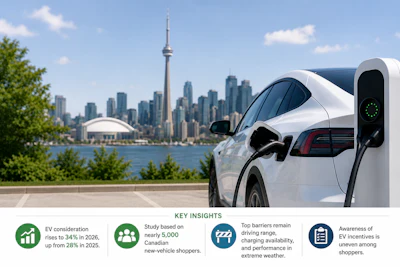
The share of Canadian new-vehicle shoppers who say they are likely to consider an electric vehicle has climbed to 34% in 2026, up from 28% in 2025, according to the J.D. Power 2026 Canada Electric Vehicle Consideration Study. The latest result marks the first measurable increase in EV consideration in Canada since tracking began in 2022, reversing a multi-year period of stagnation and decline in consumer interest.
The study, fielded between March and April 2026 and based on responses from nearly 5,000 new-vehicle shoppers, shows that EV interest is gradually rebuilding as market conditions evolve. While the report does not point to a single driver of the increase, it highlights a combination of shifting affordability conditions, expanding model availability, and growing consumer familiarity with electric vehicles. At the same time, the gap between Canada and the United States remains significant, with Canadian consideration still well below U.S. levels.
Despite the improvement, barriers to adoption remain firmly in place. The study notes that concerns around driving range, charging availability, and performance in extreme weather continue to be the most frequently cited reasons shoppers are hesitant to move to electric vehicles. These factors are particularly influential in colder regions, where winter performance and charging reliability are seen as key practical limitations.
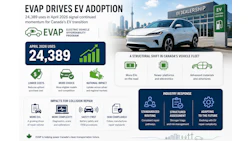
The findings also show that awareness of policy support is uneven. EV incentives such as Canada’s Electric Vehicle Affordability Program (EVAP) are contributing to higher consideration among some shoppers, but a meaningful portion of the market still reports limited understanding of how such programs apply at the point of purchase.
Overall, the 2026 results point to a market that is slowly regaining momentum but remains highly sensitive to cost, infrastructure, and real-world usability concerns. While EV consideration is trending upward for the first time in several years, the study suggests that sustained growth will depend on continued improvements in affordability, charging access, and consumer confidence in cold-weather performance.