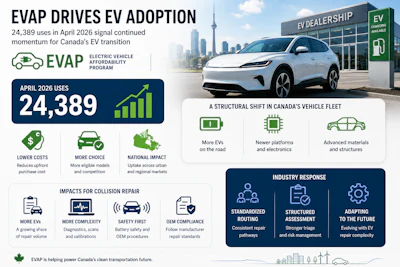
The Electric Vehicle Affordability Program (EVAP) recorded 24,389 uses in April 2026, continuing a strong year of uptake for Canada’s federal EV incentive framework. EVAP replaced the previous iZEV rebate system in 2026 and is designed to reduce the upfront purchase cost of eligible battery electric, fuel cell, and qualifying plug-in hybrid vehicles through point-of-sale incentives applied directly at the dealership. The program targets accessibility by lowering initial transaction costs at the moment of purchase, helping sustain demand as EV adoption expands across both urban and regional markets.
The April figure reflects steady momentum in eligible vehicle transactions as automakers broaden their EV lineups and dealers adapt to a more consistent incentive-driven purchasing environment. With pricing thresholds and eligibility criteria shaping consumer choice at the point of sale, EVAP has become a central mechanism influencing how quickly EV inventory moves through Canadian dealerships. The result is a more stable adoption curve, particularly as more mainstream models enter the incentive bracket and compete directly with internal combustion alternatives.
Beyond sales activity, the program’s scale is beginning to reflect broader structural change in the national vehicle fleet. As EVAP-supported vehicles accumulate on roads, they are reshaping the composition of the active vehicle parc, with newer platforms that feature increased electronic integration, higher-voltage systems, and more complex structural materials becoming more common year over year.
For the collision repair sector, the significance of the 24,389 figure is tied less to the monthly incentive volume itself and more to what it represents downstream. A growing share of vehicles entering repair facilities are late-model EVs that require more detailed diagnostic workflows, manufacturer-directed repair procedures, and post-collision calibration of advanced driver assistance systems. Even relatively minor collisions are increasingly triggering additional steps related to battery safety verification, scan requirements, and OEM repair compliance.
Insurers and repair networks are responding to this shift by placing greater emphasis on standardized repair routing and structured assessment processes to manage both technical risk and repair consistency. As EVAP continues to support higher EV penetration, the collision repair industry is steadily adapting to a workload defined less by traditional body repair and more by integrated mechanical, electrical, and software-driven repair complexity.