The September 2026 EV/AV report highlights major industry momentum: Canada Nickel invested $1.5 billion in an autonomous electric mining fleet, autonomous mobility provider Beep raised $130 million in Series B funding, consumer interest in electric vehicles in Canada reached 34%, and LION refocused its electric school bus operations in Quebec.
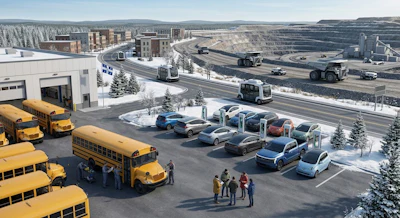
- Canada Nickel Company purchased a $1.5-billion autonomous and electric mining fleet for its Crawford Nickel Project in Ontario, positioning it as one of the world's first net-zero carbon nickel mines.
- Beep, Inc. secured $130 million in Series B funding to scale its autonomous mobility-as-a-service platform across U.S. communities and municipal pilot programs.
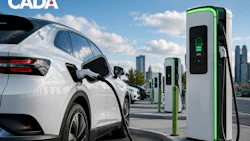
- 34% of Canadian new-vehicle shoppers now consider electric vehicles, marking the first increase since 2022, driven by rising fuel prices and returning tax credit programs.
- Cold-weather performance and charging station availability remain primary barriers for nearly half of Canadian shoppers considering EV purchases.
- LION Electric refocused operations exclusively in Quebec to improve vehicle uptime and restore customer confidence through centralized parts distribution and technical support.
In this week's EV/AV report, an autonomous mobility firm secures substantial funding for its next-gen technologies, an analytics provider highlights rising consumer interest in electrified transport, a major mining player commits to an autonomous hauling fleet, and a commercial vehicle manufacturer refocuses its production efforts to Quebec.
Nickel Drive
Canada Nickel Company Inc., a Toronto-based mining company, is purchasing a $1.5-billion autonomous and electric mining fleet.
The Toronto-based company, which advances next-generation nickel-sulphide projects, announced on Sept. 14 that it would purchase a $1.5-billion autonomous and electric load-and-haul mining fleet. According to company officials, the move will significantly reduce diesel fuel consumption and carbon dioxide emissions while facilitating an easy transition to battery-powered electric vehicles. The transaction ranks among the largest equipment investments in the Canadian mining sector this year.
"We expect that SMS Equipment’s experience implementing these technologies at other Canadian operations and demonstrated commitment to our project can substantially de-risk the project startup and ongoing operation," Mark Selby, chief executive officer of Canada Nickel Company Inc., said, according to a press release.
The automated fleet will be utilized at the company's flagship Crawford Nickel Project in northern Ontario. Once fully operational, the site is expected to operate as one of the world's first net-zero carbon nickel mines.
Beep Boop
Beep, Inc., a Lake Nona, Fla.-based autonomous mobility provider, is securing substantial funding to scale its mobility network.
The company, which provides autonomous mobility solutions, announced on Sept. 9 that it would close a Series B funding round. According to company officials, the move will raise total capital to approximately $130 million and scale its mobility-as-a-service offerings. The infusion of funds will also support the continued deployment of software designed to oversee self-driving transit fleets.
"This strategic investment round, led by Mobileye and supported by our longstanding investor partners, positions Beep to deliver fully on its vision," Kevin Reid, chief executive officer and chairman of Beep, Inc., said, according to a press release. "The investment enables us to strengthen and expand our shared autonomous mobility solutions, helping communities move people in ways that are safer, smarter, and more connected."
The company's AutonomOS platform specializes in managing self-driving transit networks across public and private communities. It is currently deployed in several master-planned developments and municipal pilot programs across the United States.
Power Trip
J.D. Power, a consumer data and analytics firm, is highlighting rising consumer interest in electric vehicles.
The Michigan company, which provides consumer data and analytics, announced on May 28 that it would release its latest Canada Electric Vehicle Consideration Study. According to company officials, the move will outline how 34% of Canadian new-vehicle shoppers are now likely to consider an EV, marking the first consideration increase since 2022. This rebound follows a prolonged period of consumer hesitation linked to high inflation and supply chain bottlenecks.
"A combination of steadily rising fuel prices and the return of tax credit programs like EVAP are spurring rising interest in EVs in Canada," J.D. Ney, managing director of J.D. Power Canada, said, according to a press release. "But for most shoppers, the deciding factors remain everyday practicality: how far they can drive on a charge, whether charging is reliably available when needed and how EVs perform in Canadian winters."
The study noted that nearly half of Canadian shoppers remain very unlikely to consider an EV, citing cold-weather performance and charging station availability as primary barriers. Concerns regarding vehicle battery degradation in extreme temperatures continue to strongly influence purchase decisions outside of major urban centres.
Lion's Share
LION, a company that manufactures electric school buses, is bringing its design and assembly operations back to its home province.
The Quebec-based company announced on March 25 that it would refocus its operations exclusively on vehicles designed and assembled in Quebec.
According to company officials, the move will improve vehicle uptime by partnering with regional school bus operators to act as authorized service centres. The strategic pivot aims to restore customer confidence by centralizing parts distribution and technical support within the province.
"The initial results of our relaunch demonstrate that there is a real and sustainable market for electric school buses in Quebec," Luc Sabbatini, chairman of the board at LION, said, according to a press release. "The electrification of school transportation represents an opportunity to combine economic development, industrial innovation, and collective responsibility."
The restructuring comes after the manufacturer, formerly known as Lion Electric, sought creditor protection amid public financial struggles prior to being acquired by local investors. New ownership expects the simplified business model to stabilize the company's balance sheet by early next year.