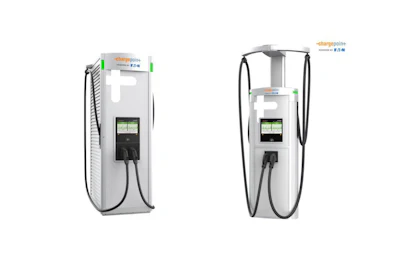
ChargePoint has introduced a new DC fast charger capable of delivering up to 600 kilowatts to a single electric vehicle, positioning it as the fastest standalone charger for passenger EVs on the market.
The new system, called Express Solo, combines all charging components into a single unit, eliminating the need for a separate power cabinet. It can charge two vehicles at once and, when paired with an additional dispenser, can serve up to four vehicles while dynamically distributing power.
ChargePoint says the charger delivers roughly 40 per cent higher power density than existing DC fast charging systems and is designed for installation in space-constrained locations such as urban sites and retail fuel stations.
The system supports both CCS and NACS connectors through the company’s Omni Port technology and is part of a new charging architecture developed with Eaton that allows integration with energy storage and renewable power sources.
The launch comes as charging speed and infrastructure availability remain key barriers to EV adoption, with faster charging seen as critical to improving driver convenience and reducing downtime.
For collision repair shops, faster charging infrastructure has indirect but important implications. As higher-speed charging becomes more common, EV utilization rates are expected to increase, meaning vehicles spend less time idle and more time on the road. That typically leads to higher exposure to collisions and a growing share of EVs entering repair facilities.
Higher charging capability also supports the rollout of next-generation EVs with larger battery packs and higher voltage systems. These vehicles often require more complex repair procedures, additional safety protocols and more advanced tooling in collision environments.
The expansion of high-speed charging networks may also influence total loss decisions. Improved charging access and reduced downtime can help maintain vehicle value, potentially keeping more EVs in the repairable category rather than being written off after a collision.
As infrastructure continues to evolve, collision repairers can expect a gradual shift toward higher-volume, higher-complexity EV repairs, driven not only by vehicle technology but also by how quickly those vehicles can return to service.