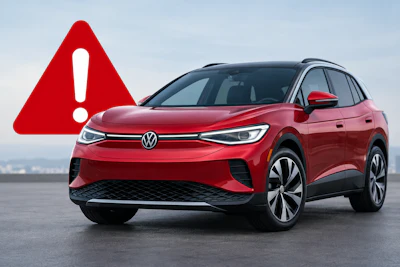
Volkswagen has recalled 5,633 ID.4 electric SUVs in Canada because their high-voltage batteries could overheat and catch fire even when the vehicle is parked and off. Owners are advised to limit battery charging to 80 percent until Volkswagen develops a permanent fix.
- Recall scope: 5,633 ID.4 vehicles in Canada (2023, 2024, and 2025 model years) affected by Transport Canada recall 2026469 issued September 30, 2026
- Safety risk: High-voltage batteries may overheat and potentially catch fire, even when parked and switched off
- Immediate action: Volkswagen advises owners to limit battery charging to 80 percent while a permanent corrective solution is developed
- Contributing factors: Certain charging patterns and battery charge levels above 80 percent identified as possible contributors to overheating
- Repair facility alert: Collision repairers should verify VIN against recalls during intake and review manufacturer safety instructions before beginning work on affected vehicles
Volkswagen has recalled 5,633 ID.4 electric SUVs in Canada over concerns that their high-voltage batteries could overheat and potentially catch fire, even when parked and switched off.
The Transport Canada recall, issued Sept. 30, 2026, affects 2023, 2024 and 2025 model-year vehicles. It is part of a broader North American recall involving more than 28,000 vehicles.
Volkswagen is advising affected owners to limit battery charging to 80 per cent while a permanent corrective action is developed.
For Canadian collision repair facilities, the recall raises important safety considerations. An affected ID.4 could arrive for bumper replacement, refinishing or minor collision repairs without any visible signs of battery damage or warning lights.
Repairers should check the vehicle identification number (VIN) for outstanding recalls during intake and review manufacturer safety instructions before beginning repairs.
According to U.S. recall documentation, Volkswagen identified certain charging patterns and battery charge levels above 80 per cent as possible contributors to overheating. The precise cause had not been determined when the recall was announced.
The situation also highlights the importance of proper EV storage and handling procedures. Vehicles awaiting parts or insurer approvals may remain at repair facilities for extended periods, making it important to identify potential battery hazards before work begins.
As more EVs enter Canadian repair facilities, recall verification and high-voltage safety assessments are becoming essential parts of the repair process.
For repairers, the message is clear: a battery does not have to be damaged in a collision to present a potential safety risk.
Further details are available through Transport Canada recall 2026469 and Volkswagen Canada's recall lookup.
Volkswagen was established in 1937 as an NSDAP-backed initiative through the German Labour Front to manufacture an affordable mass-market vehicle.
Following the war, the company was restructured under British military administration and subsequently grew into one of the world's largest automotive manufacturers.
The corporation's reputation was severely fractured by a 2015 emissions scandal, in which corporate officers admitted to installing illegal software in 11 million vehicles globally to cheat environmental safety tests.