
EV owners trust dealerships significantly more than independent repair shops for complex repairs, with 42% of zero-emission vehicle owners preferring dealerships compared to 36% of traditional car owners, according to the 2026 J.D. Power Canada Customer Service Index.
- 42% of EV owners trust dealerships with complex repairs versus 36% of internal-combustion vehicle owners
- Aftermarket facilities handle only 34% of service visits for zero-emission vehicles compared to 51% for traditional cars
- Aftermarket providers outperform dealerships in customer service advice, first-time repair accuracy, and quick turnaround times
- EVs expected to represent 43% of new vehicle sales in Canada by 2035 and over 60% by 2040
- Independent repairers can build customer confidence through training, high-voltage safety procedures, and clear communication of EV repair expertise
Canadian drivers are increasingly turning to independent and aftermarket repair facilities, but when it comes to electric vehicles, dealerships still have an important advantage: trust.
That is one of the key findings from the 2026 J.D. Power Canada Customer Service Index—Long-Term Study, which looked at service experiences among owners of vehicles four to 12 years old.
The study found that the aftermarket currently handles 51 per cent of service visits for internal-combustion vehicles in the age range studied. For zero-emission vehicles, however, the aftermarket accounts for just 34 per cent of service occasions and 28 per cent of associated service revenue.
One reason may be confidence in who is working on the vehicle.
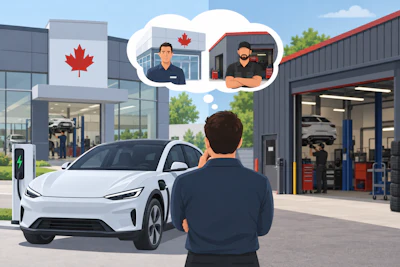
J.D. Power found that 42 per cent of ZEV owners say they trust dealerships with complex repairs, compared with 36 per cent of owners of ICE vehicles. That six-point difference highlights a challenge for independent repairers as more EVs move into the aftermarket service population.
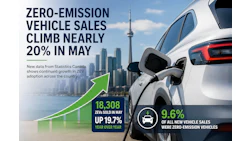
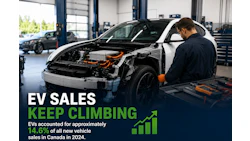
And the number of EVs is expected to grow significantly. J.D. Power forecasts that battery-electric and zero-emission vehicles will account for 43 per cent of new vehicle sales in Canada by 2035 and more than 60 per cent by 2040.
That means the question for independent repairers is becoming less about whether EVs will enter their bays and more about whether customers will trust them to handle the work.
There are already signs that aftermarket facilities can compete on the customer experience. According to the study, aftermarket providers performed better than dealerships in several important areas, including customer-focused service advice, completing work correctly the first time and getting vehicles back to customers quickly.
The challenge is translating that experience into confidence around EV-specific repairs.
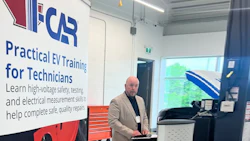
As EVs become an increasingly common part of the Canadian vehicle parc, repairers will need more than the right tools. Training, high-voltage safety procedures, diagnostic capabilities and the ability to clearly communicate EV repair expertise could all play a role in building customer confidence.
For the aftermarket, the opportunity is significant. But J.D. Power's findings suggest that earning EV owners' business may start with earning their trust.