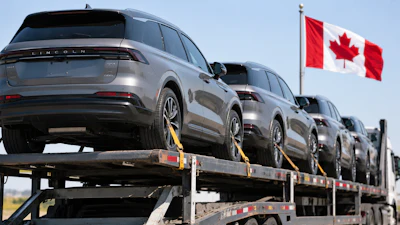
Canada added 80 Chinese vehicles to its import quota in its latest update, including 69 conventional hybrid SUVs and 11 electric vehicles, bringing the total imports to 16,291 of the 49,000 available slots through February 2027.
- Canada added 80 Chinese vehicles in its November update: 69 conventional hybrid SUVs (believed to be Lincoln Nautilus models) and 11 electric SUVs
- Total imports under the quota now reach 16,291 vehicles, with 32,709 import slots remaining through February 28, 2027
- Import pace has slowed significantly: 15,603 vehicles imported March-August versus only 688 since September 1
- Tesla has exhausted its allocation and can no longer import vehicles under the current quota framework
- Chinese vehicle arrivals create new demands for collision repairers, including parts availability, OEM procedures, diagnostics, and training for unfamiliar platforms
Canada's latest update on vehicle imports from China has added 80 vehicles to the country's tally under its Chinese vehicle import quota, although the majority were conventional hybrids rather than fully electric vehicles.
The Nov. 20 update from Global Affairs Canada revised October's previously reported zero imports to 69 conventional hybrid SUVs and passenger vans. The report also added 11 fully electric SUVs and passenger vans to November's figures.
The government report does not identify individual manufacturers or vehicle models. However, the 69 hybrid vehicles are believed to be China-built Lincoln Nautilus Hybrids, following earlier import batches of the same vehicle and confirmation that Chinese-built Nautilus models have been arriving in Canada.
Among the 11 electric vehicles added to November's figures, the Lotus Eletre is one possible model. The China-built electric SUV has previously been shipped to Canada. The report lists all 11 vehicles at customs values exceeding $35,000.
The latest figures bring Canada's total imports under the first-year quota to 16,291 vehicles. Of the original 49,000 import spots available between the quota's opening and Feb. 28, 2027, 32,709 remain.
Imports have slowed considerably since the quota's initial period. Canada recorded 15,603 vehicles between March and August, compared with just 688 since the second reporting window opened Sept. 1.
The remaining quota capacity does not necessarily mean all manufacturers have access to additional import slots. Tesla, for example, has reportedly exhausted its allocation and is no longer able to import vehicles under its current allowance.
The figures offer a snapshot of how Canada's revised import framework is being used, with both electric vehicles and conventional hybrids contributing to the overall tally.
The potential arrival of additional Chinese-built vehicles in Canada introduces another consideration for collision repairers: parts availability, access to OEM repair procedures, diagnostic capabilities and training for unfamiliar vehicle platforms. While the import figures alone don't signal an immediate change in repair volumes, a broader mix of vehicle brands and models could eventually create new demands on shops as these vehicles enter the Canadian fleet.