Create a free EV Repair account to continue reading
EV IN FOCUS - CANADA’S BEST-SELLING EVS UNDER THE MICROSCOPE
April 22, 2026
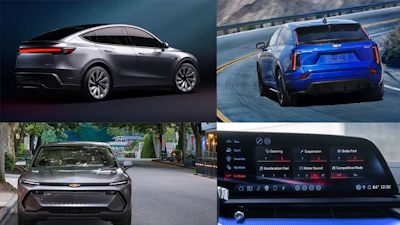
Driver’s side view of 2026 Chevrolet Equinox EV 1LT in Galaxy Gray Metallic driving down the road. Preproduction model shown. Actual production model may vary. Visit chevy.com/EquinoxEV for availability.
CHEVROLET EQUINOX EV
Canada’s top-selling EVs are changing the way shops work — and the Chevrolet Equinox EV is leading the charge. In this feature, we take a close look at its design, technology, and what repairers need to know to stay ahead. Designed to bring electric mobility to the mainstream, the Equinox EV balances affordability with modern technology. Built on GM’s Ultium platform, it features a flexible battery architecture and streamlined electronics that simplify manufacturing — but introduce new repair considerations around structural integration and calibration. For collision repairers, its mix of advanced driver assistance systems and cost-conscious design makes it a key vehicle to understand as EV adoption expands.
For more information on GM Canada visit collisionrepairmag.com/15740622
CHEVROLET EQUINOX EV — REPAIR PROS & CONS
EV REPAIR PROS
• Accessible design and parts strategy: High-volume production leads to better parts availability and more standardized repair procedures.
• Ultium platform familiarity:
Shared architecture with other GM EVs reduces the learning curve for repair shops.
• Fewer mechanical components: No traditional engine or transmission simplifies certain repairs.
• Growing OEM support: GM’s EV training, certifications, and documentation continue to expand.
EV REPAIR CONS
• Battery-related repair complexity: Collisions may require battery pack inspection or replacement.
• ADAS calibration requirements: Advanced systems need precise recalibration after many repairs.
• High-voltage safety protocols: Strict procedures and PPE are required when working around energized components.
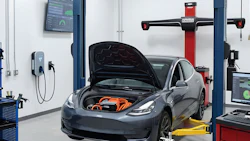
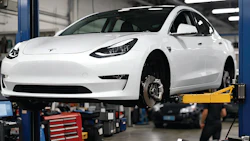
All images courtesy of Tesla, Inc. For availability visit Tesla.com
TESLA MODEL Y
As one of the best-selling EVs globally, the Model Y continues to influence how vehicles are designed — and repaired. Its minimalist construction, large cast body sections and software-driven systems set it apart from traditional vehicles. For technicians, that means fewer parts in some areas but greater emphasis on structural repair procedures, diagnostics and OEM-approved methods. Its prevalence alone makes it a critical model for any shop servicing electric vehicles.
For more information on Tesla visit collisionrepairmag.com/15740937
TESLA MODEL Y — REPAIR PROS & CONS
EV REPAIR PROS
• High availability of online repair resources: Tesla’s technical documentation and repair guides are extensive and constantly updated online.
• Simplified mechanical layout: Minimalist design and fewer moving parts make some repairs straightforward.
• Structural rigidity benefits: Large cast body sections can improve collision safety.
• High market presence: Commonly encountered EV, giving shops experience with frequent repairs.
EV REPAIR CONS
• Complex body repair: Large castings make panel replacements and structural repairs more challenging.
• Software dependency: Many systems require Tesla-specific software to diagnose or recalibrate.
• Battery pack sensitivity: Repairs near the floor require careful handling to avoid high-voltage risks.
Cadillac’s EV lineup signals a shift toward luxury electrification, with the LYRIQ and OPTIQ showcasing premium materials, advanced displays and refined Ultium-based engineering. These models introduce added complexity through integrated lighting, sensor-rich exteriors and high-end interior systems. From a repair perspective, they demand careful attention to calibration, material handling and brand-specific procedures — reflecting the elevated expectations that come with luxury EV ownership.
For more information on GM Canada visit collisionrepairmag.com/15740622
CADILLAC OPTIQ SERIES — REPAIR PROS & CONS
EV REPAIR PROS
• Premium build quality: High-end materials and components allow for durable repairs when OEM procedures are followed.
• Shared Ultium platform: Familiarity with GM EV architecture aids trained shops in efficient repairs.
• Advanced safety systems: ADAS and battery safety protocols are well-integrated, providing clear OEM guidance.
• Luxury EV market insights: Servicing these models positions shops as EV-capable specialists.
EV REPAIR CONS
• Complex interior and exterior systems: Integrated lighting, displays, and sensors increase repair difficulty and cost.
• Battery and floor integration: Structural integration complicates underbody and collision repairs.
• Calibration-heavy: Numerous sensors and high-end driver assistance systems require specialized recalibration.
• High repair costs: Luxury components and replacement parts drive higher repair expenses.