Toronto, Ontario -- In this week's autonomous/electric vehicle report, Waymo hits the highways, the U.S. Military invests in autonomous tech and researchers determine Canada isn't ready for EVs to return power to the grid.
Waymo robotaxi expansion
Waymo has begun offering robotaxi rides on freeways in Los Angeles, San Francisco and Phoenix, marking its first foray beyond surface streets.
The change, announced November 11, allowed riders to take faster, longer trips while cutting travel times by as much as half. The update also expanded the company’s Bay Area network to include San Jose and a 260-mile service zone, with airport pick-ups now possible.
Waymo said customers who opted in through its app could be matched with freeway routes, signalling a major step toward full-scale autonomous coverage.
Forterra valuation deal
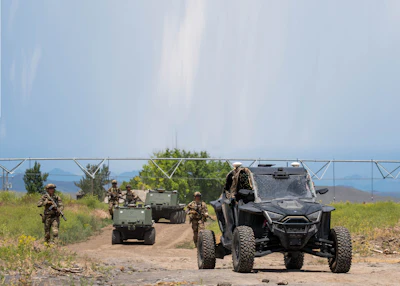
Forterra, a startup developing autonomous military vehicles, secured US$238 million in fresh financing that lifted its valuation beyond US$1 billion. The round was led by Moore Strategic Ventures and included a US$50 million debt component to boost production.
Forterra builds unmanned ground systems designed for defence uses such as reconnaissance and transport, operating individually or in coordinated fleets.
According to a press release from Forterra, the investment will help expand manufacturing and deployment of its modular, AI-driven “cognitive mission systems.”
Forterra said the funds would strengthen its command and communications technology and speed delivery of vehicles that move and act without human input.
Global EV sales growth
Global sales of battery-electric and plug-in hybrid vehicles rose 23 percent in October 2025 to roughly 1.9 million units, based on data from research firm Rho Motion.
Europe led the surge with a 36 percent gain, while China accounted for more than half of all global EV sales at about 1.3 million units. North America, by contrast, saw sales fall 41 percent to just over 100,000 vehicles as a key U.S. tax credit expired and EV prices stayed high.
Vehicle-to-grid standards in Canada
A new study by Dunsky Energy + Climate for the CSA Group has found vehicle-to-grid technology in Canada remained hampered by fragmented standards and inconsistent regulation.
According to the report, electric vehicles were becoming significant electrical loads in Canada and risk straining the grid if charging infrastructure does not improve. The study found that vehicle-to-grid and broader vehicle-grid integration systems could allow EVs to return energy to the grid, support demand response and improve reliability.
Researchers said progress was limited by fragmented standards, incompatible communication protocols and uneven interconnection rules. They recommended aligning national and international standards, creating certification programs and clarifying utility procedures to unlock the technology’s potential.