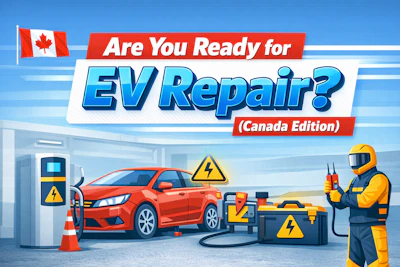

Electric vehicles are becoming a normal part of the collision repair mix across Canada, driven by federal incentives, provincial mandates and OEM electrification plans. For many bodyshops, the real challenge isn’t demand — it’s readiness. Before accepting EV work, there are a few fundamentals every Canadian shop should honestly assess.
Do you have the space?
EV repairs may require designated parking, isolation or quarantine areas and clearly marked safety zones. In urban markets, space constraints can quickly become a limiting factor.
Do you have the training?
High-voltage systems, battery construction and new materials demand EV-specific training. At least one technician — ideally more — should have current EV training recognized by OEMs or industry programs available in Canada.
Do you have the tools?
Insulated tools, voltage testers, scan tools and access to OEM repair information are essential. EV repairs can’t be improvised with conventional equipment.
Do you have staff buy-in?
EV repair introduces new safety concerns and changes daily routines. Clear communication and proper training are key to building technician confidence.
Beyond the basics, EV repair brings additional realities that Canadian shops need to plan for.
OEM procedures must be followed — and documented
Canadian liability standards leave little room for interpretation. If it isn’t documented, it didn’t happen.
Battery damage isn’t always visible
Even low-speed collisions can affect battery systems. Proper assessment and teardown often take more time than expected — and need to be accounted for.
High-voltage safety protocols must be formalized
Lock-out/tag-out procedures, voltage verification and controlled work zones should be written, followed and documented every time.
Sublet partners need EV credentials
Diagnostics, calibrations and battery-related work require sublet partners who are properly trained and insured for EV work in Canada.
Charging access affects cycle time
Limited charging infrastructure — particularly in colder climates — can quietly add hours or days to a repair if not planned into the workflow.
Knowing when to decline an EV repair protects your shop
Saying no to work you’re not equipped to handle is a business decision — and often the safest one.
Bottom line:
EV repair readiness in Canada isn’t about chasing volume or incentives. It’s about safety, documentation and knowing your limits — and building capability deliberately.
👉 Read more EV Repair coverage at EVRepairMag.com